Why a High-Protein Label Can Still Mean You're Eating a Candy Bar
Quick Answer: Front-of-package protein claims highlight one number while sugar content, sugar alcohols, and saturated fat from coatings often go unmentioned in the marketing, meaning a bar can legitimately deliver 20 grams of protein while also delivering close to a candy bar’s worth of sugar and calories — the protein number being true doesn’t mean the rest of the nutrition profile matches the healthy framing.
Twenty grams of protein sounds like a clear win on the front of the label — until the ingredient list and sugar line further down tell a very different story.

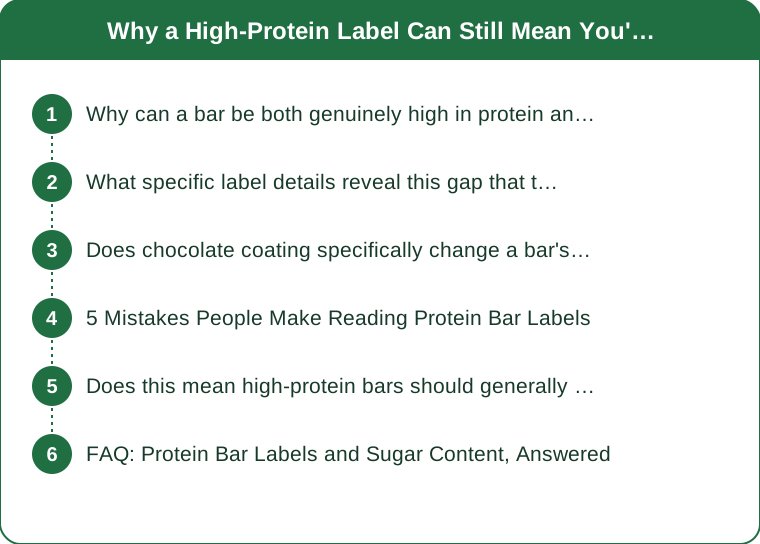
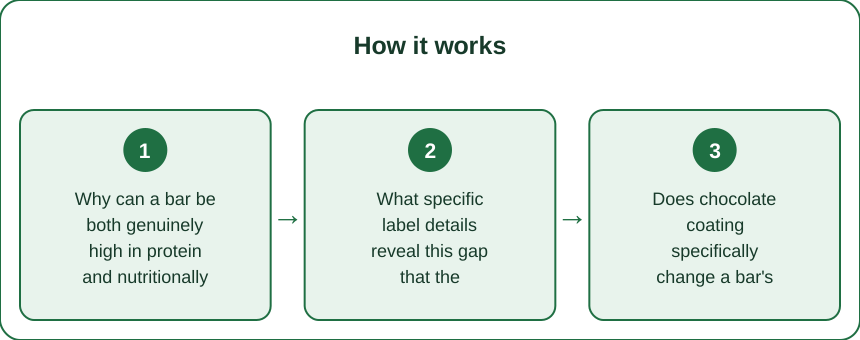
Why can a bar be both genuinely high in protein and nutritionally similar to candy?
Protein content and sugar content are independent numbers, and a manufacturer can boost protein with whey or soy isolate while still using high amounts of sugar, corn syrup, or sugar alcohols to achieve the texture and taste consumers expect from a treat-like product, meaning both the protein claim and a candy-like sugar profile can be simultaneously true on the same bar.
What specific label details reveal this gap that the front-of-package claim hides?
Checking total sugar grams (not just ‘no added sugar’ claims, which sugar alcohols and juice concentrates can sidestep), total saturated fat from any chocolate coating, and where sugar or corn syrup solids fall in the ingredient list’s order reveals whether a bar’s overall profile matches a genuine snack or leans closer to a candy bar wearing a protein claim.
Does chocolate coating specifically change a bar’s nutritional category?
Yes — a chocolate or yogurt coating adds meaningful saturated fat and sugar on top of whatever’s in the bar itself, and bars with a thick coating often end up with a saturated fat and sugar profile much closer to a candy bar than an uncoated or lightly coated bar with the same protein number.

5 Mistakes People Make Reading Protein Bar Labels
Trusting the front-of-package protein number as the whole nutritional story, missing that ‘no added sugar’ doesn’t mean low sugar alcohol content, not checking where sweeteners fall in the ingredient order, assuming all bars in a ‘protein’ product line have similar profiles across flavors, and comparing bars by protein grams alone without checking calories and sugar per serving.
Does this mean high-protein bars should generally be avoided?
Not at all — many protein bars genuinely deliver a reasonable protein-to-sugar-to-calorie ratio and work well as a convenient snack, but the only way to tell which bars fall into that category versus the candy-adjacent category is reading the full label rather than relying on the front-of-package protein claim alone.
FAQ: Protein Bar Labels and Sugar Content, Answered
What’s a reasonable sugar-to-protein ratio to look for in a genuinely balanced protein bar?
Many nutrition-focused reviewers suggest looking for bars with sugar grams roughly equal to or less than protein grams as a simple starting benchmark, though total calories and fiber content matter too.
Are sugar alcohols in ‘no added sugar’ bars a health concern?
Sugar alcohols are generally recognized as lower-impact on blood sugar than regular sugar, but they can cause digestive discomfort in larger amounts for some people, and a bar loaded with them isn’t automatically a ‘clean’ choice just because it avoids the added-sugar label technically.
Does bar price correlate with a better sugar-to-protein profile?
Not reliably — some premium-priced bars still lean heavily on sugar and coating for taste, while some budget bars have leaner sugar profiles, making label reading a more reliable filter than price alone.
TL;DR:
- A bar’s front-of-package protein claim and its overall sugar profile are independent facts that can both be true at once
- Chocolate or yogurt coatings add meaningful sugar and saturated fat beyond the bar’s core ingredients
- Reading full sugar content and ingredient order reveals what the protein number alone doesn’t
- Not all high-protein bars are candy-adjacent — but only full label reading tells them apart
A true protein number on the front doesn’t guarantee a genuinely balanced snack — flipping the bar over and checking sugar, coating, and ingredient order is what actually tells the difference between a smart snack and dessert in disguise.
Keep Reading
This article is for general informational purposes only and is not medical advice. Always consult a qualified health professional for guidance specific to you.