Why a 'High Protein' Label Doesn't Rule Out a Glorified Candy Bar
A bar boasting twenty grams of protein looks like an obviously smart choice, but that number alone says nothing about what else is packed into the rest of the bar, and it’s frequently more than most people expect.

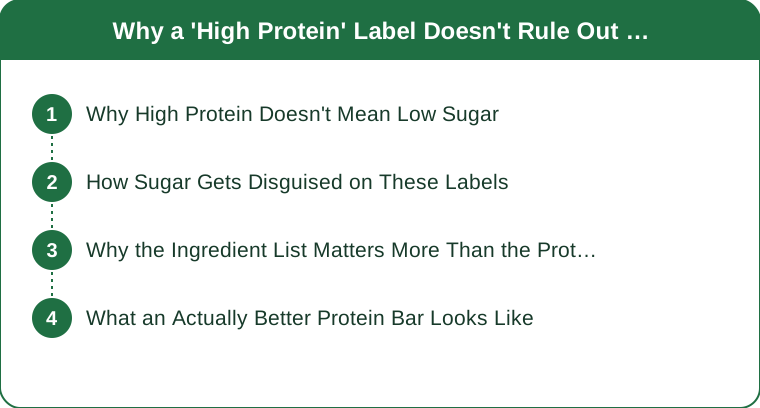
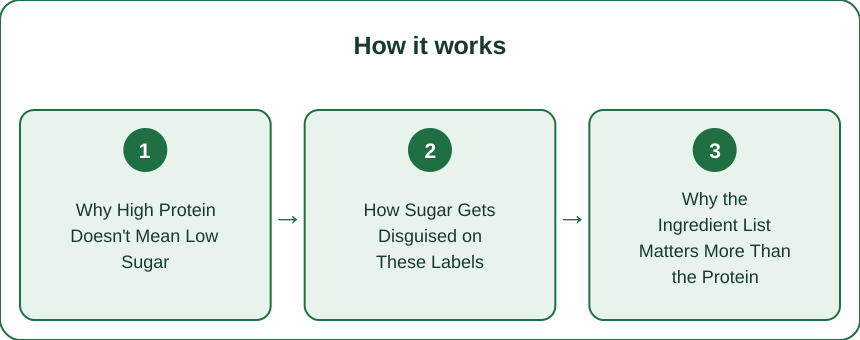
Why High Protein Doesn’t Mean Low Sugar
The disconnect: protein content and sugar content being entirely independent numbers on a nutrition label, meaning a bar can legitimately advertise twenty grams of protein while also containing fifteen to twenty grams of added sugar, close to a candy bar’s sugar load.
How Sugar Gets Disguised on These Labels
The label trick: sugar appearing under multiple different names, brown rice syrup, cane juice, agave, chicory root fiber syrup, spread across several ingredients specifically so no single sugar source ranks high enough alone to stand out.

Why the Ingredient List Matters More Than the Protein Number
The better check: scanning the ingredient list for how many separate sugar-type ingredients appear, and checking total sugar grams directly, being a far more reliable way to judge a bar than the prominently marketed protein number alone.
What an Actually Better Protein Bar Looks Like
The practical standard: looking for bars with under eight to ten grams of total sugar and a shorter, more recognizable ingredient list, since a genuinely well-formulated high-protein bar doesn’t need to lean on multiple sugar sources to taste good, and the frame (a high protein number on the label says nothing about sugar content — checking total sugar grams and the ingredient list directly is what separates a real protein bar from a candy bar with a marketing upgrade.)
A bar boasting twenty grams of protein looks like an obviously smart choice, but protein content and sugar content are entirely independent numbers on a nutrition label, meaning a bar can legitimately advertise twenty grams of protein while also containing fifteen to twenty grams of added sugar, close to a candy bar’s sugar load. That sugar often gets disguised across the ingredient list under several different names, brown rice syrup, cane juice, agave, chicory root fiber syrup, spread out specifically so no single source ranks high enough alone to stand out. Scanning the ingredient list for how many separate sugar-type ingredients appear, and checking total sugar grams directly, is a far more reliable way to judge a bar than the prominently marketed protein number, and looking for bars with under eight to ten grams of total sugar and a shorter, more recognizable ingredient list is a reasonable practical standard, since a genuinely well-formulated bar doesn’t need multiple sugar sources to taste good.
Keep Reading
This article is for general informational purposes only and is not medical advice. Always consult a qualified health professional for guidance specific to you.