The Protein Bar Storage Mistake That Wastes Half the Bar Before You Even Open It
Quick Answer: Most protein bars start softening noticeably above roughly 75 to 80°F, which is well within the range of a hot car, a sunny gym bag pocket, or a warm backpack — storing bars in an insulated pouch or cooler bag during warm months prevents the melty, misshapen texture that otherwise ruins them before they’re even opened.
A bar that turned to mush wasn’t a bad bar — it just spent too long somewhere warmer than its ingredients were built for.

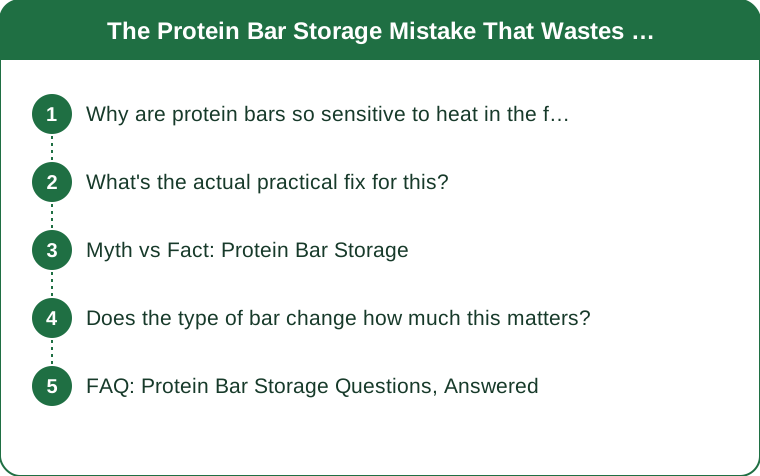
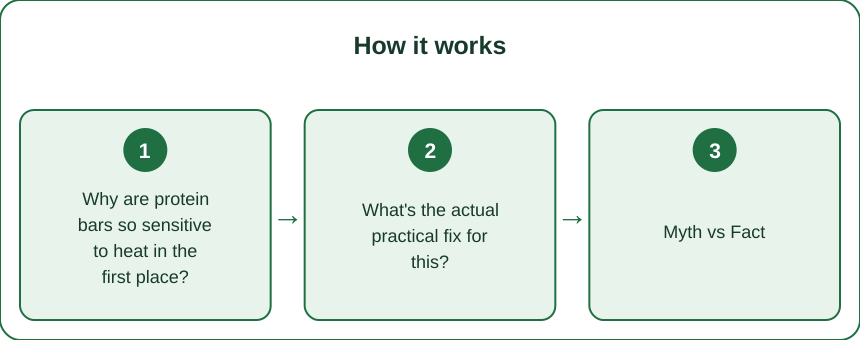
Why are protein bars so sensitive to heat in the first place?
Many protein bars use ingredients like chocolate coatings, nut butters, and certain binding syrups that are specifically chosen for a solid, chewy texture at room temperature — but those same ingredients soften or liquefy well before what feels like genuinely ‘hot’ to a person.
A car interior on a warm day can climb well past 90°F within minutes, which is far above the point where most bar coatings and binders start to break down structurally.
What’s the actual practical fix for this?
A small insulated pouch or a soft-sided cooler bag, even without ice, keeps ambient temperature around a bar noticeably lower than an exposed gym bag pocket — that gap alone is often enough to prevent the worst of the melting.
For genuinely hot conditions, a single small ice pack in the same bag extends that protection significantly, keeping bars firm through a full day of errands or a workout session in the heat.

Myth vs Fact: Protein Bar Storage
Myth: a melted protein bar is unsafe to eat. Fact: melting is a texture problem, not a food safety problem, as long as the bar hasn’t been left out long enough to spoil by normal food safety standards — it’s just unpleasant, not dangerous.
Myth: refrigerating protein bars is always necessary. Fact: most bars are shelf-stable and don’t require refrigeration under normal indoor conditions — the issue is specifically hot environments like cars and direct sun, not standard room temperature.
Does the type of bar change how much this matters?
Bars with a chocolate or yogurt-style coating are the most heat-sensitive, since coatings soften and can separate from the bar entirely in warm conditions.
Bars without a coating, or with a more baked, cookie-like texture, tend to hold up noticeably better in moderate heat, which is worth considering when picking bars specifically for hot-weather activities like outdoor workouts or travel.
FAQ: Protein Bar Storage Questions, Answered
Can a melted bar be refrigerated to fix its texture?
Refrigerating a melted bar will re-firm it somewhat, though the texture often doesn’t fully return to its original state once it’s softened and reset.
How long can a bar sit in a hot car before it’s a real problem?
Noticeable softening can start within 20 to 30 minutes in a genuinely hot car, so even short errands in summer heat are worth planning around if the bar matters.
Are there bars specifically designed to handle heat better?
Some brands market heat-stable formulas for outdoor and endurance use, and choosing one of those is a reasonable option for consistently hot environments.
TL;DR:
- Most protein bars soften noticeably above about 75-80°F, well within hot car and gym bag range
- Melting is a texture issue, not a food safety issue
- An insulated pouch, with or without an ice pack, is the simple fix
- Coated bars are more heat-sensitive than uncoated, cookie-style bars
A few dollars of insulated pouch saves a lot of ruined bars once the weather turns warm.
Keep Reading
This article is for general informational purposes only and is not medical advice. Always consult a qualified health professional for guidance specific to you.