Why 'Net Carbs' on a Protein Bar Label Doesn't Mean What Most People Assume
Quick Answer: ‘Net carbs’ is calculated by subtracting fiber and sometimes sugar alcohols from total carbohydrates, based on the idea that these components have a smaller impact on blood sugar — but this is an unregulated, brand-chosen calculation method, not a standardized FDA metric, and some sugar alcohols used in protein bars are digested and affect blood sugar more than the net carb math on the label assumes.
The net carb number on a protein bar looks like a clean, official figure, but it’s actually a calculation the brand chose to do, using assumptions that don’t hold equally true for every ingredient subtracted out of it.

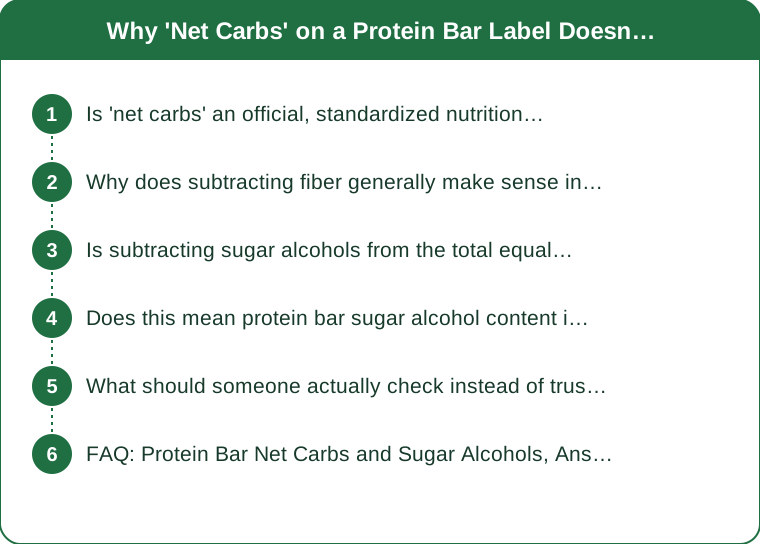
Is ‘net carbs’ an official, standardized nutrition label term?
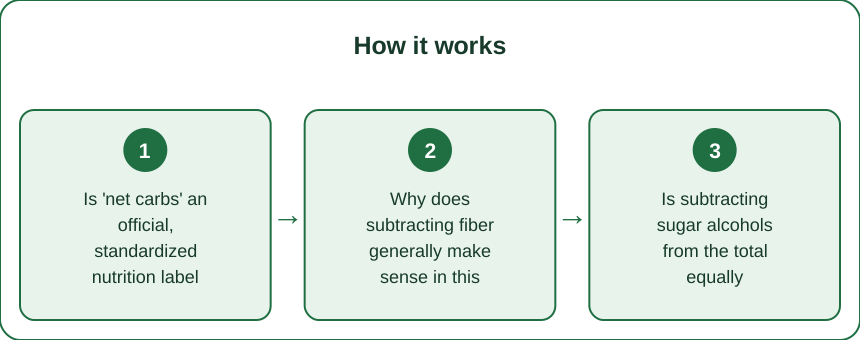
No — ‘net carbs’ is not an FDA-regulated or standardized labeling term, unlike total carbohydrates, which does have a required, standardized calculation on official nutrition labels. Brands calculate and display net carbs voluntarily, generally using total carbohydrates minus fiber and sometimes minus sugar alcohols, but there’s no single mandated formula every brand must follow the same way.
Why does subtracting fiber generally make sense in this calculation?
Fiber is largely not digested and absorbed the way other carbohydrates are, so it has minimal direct impact on blood sugar for most people, which is the legitimate reasoning behind excluding it from a blood-sugar-relevant carb count. This part of the net carb logic is reasonably well-supported, even though the term itself isn’t officially standardized.
Is subtracting sugar alcohols from the total equally justified?
This is where it gets less clean — different sugar alcohols are digested and absorbed to meaningfully different degrees, with some (like erythritol) having minimal blood sugar impact for most people, while others (like maltitol, common in many protein bars) are absorbed and metabolized more significantly than brands’ net carb math typically accounts for. A bar with maltitol may have a real blood sugar impact closer to its total carb count than its advertised net carb count suggests.

Does this mean protein bar sugar alcohol content is misleading on purpose?
Not necessarily intentionally deceptive, but the net carb calculation method commonly used across the industry doesn’t distinguish between sugar alcohols with meaningfully different digestive and blood sugar effects, treating them as more equivalent than they actually are — which produces a net carb number that can understate the real-world impact for someone specifically watching blood sugar, particularly with maltitol-containing bars.
What should someone actually check instead of trusting the net carb number alone?
Checking the ingredient list for which specific sugar alcohol is used, not just the net carb total, gives a more accurate picture — erythritol and monk fruit-based sweeteners generally have minimal blood sugar impact, while maltitol and sorbitol are more likely to have a noticeable effect closer to their listed grams than the net carb subtraction implies, which matters most for anyone managing blood sugar closely.
FAQ: Protein Bar Net Carbs and Sugar Alcohols, Answered
Do sugar alcohols cause digestive issues separate from the net carb question?
Yes — sugar alcohols, especially in larger amounts, are commonly associated with digestive discomfort like bloating or a laxative effect in many people, which is a separate consideration from their blood sugar impact.
Is total carbohydrate a more reliable number to look at than net carbs?
For most general purposes, total carbohydrate is the standardized, regulated figure, while net carbs is a supplementary, brand-calculated estimate — checking both, along with the specific sugar alcohol used, gives the fullest picture.
Are all protein bars using net carb labeling equally unreliable?
No — bars using erythritol or no sugar alcohols at all tend to have net carb figures that align more closely with actual blood sugar impact than bars relying heavily on maltitol, so the specific ingredient matters more than the labeling practice itself.
TL;DR:
- ‘Net carbs’ is an unregulated, brand-calculated figure, not a standardized FDA nutrition term
- Subtracting fiber is generally well-supported since fiber has minimal blood sugar impact for most people
- Subtracting all sugar alcohols equally isn’t as justified — some, like maltitol, have a real blood sugar effect
- Checking the specific sugar alcohol in the ingredient list matters more than trusting the net carb total alone
The net carb number isn’t fake, but it’s not the full story either — a quick look at which sugar alcohol is actually in the bar tells you more than the front-of-label math does.
Keep Reading
This article is for general informational purposes only and is not medical advice. Always consult a qualified health professional for guidance specific to you.