When a Protein Bar Is the Right Answer (and the 4 Times It Isn't)
Quick Answer: A protein bar is portable insurance, not a food group — it wins in four scenarios: the gap-bridge (3+ hours between real meals), the post-workout stopgap when food is far away, travel days, and the vending-machine standoff. It loses as a meal replacement, a daily dessert habit, a weight-loss cornerstone, and a pantry snack you eat at home 10 feet from a fridge full of better options. Match the bar to the job and the category makes sense; use it everywhere and it’s expensive candy with a gym membership.
The protein bar aisle runs on a strategic ambiguity — marketed like health food, formulated like confectionery, priced like neither. The resolution isn’t picking a side in the ‘are bars good or bad’ debate; it’s noticing that the question was always when, not whether.

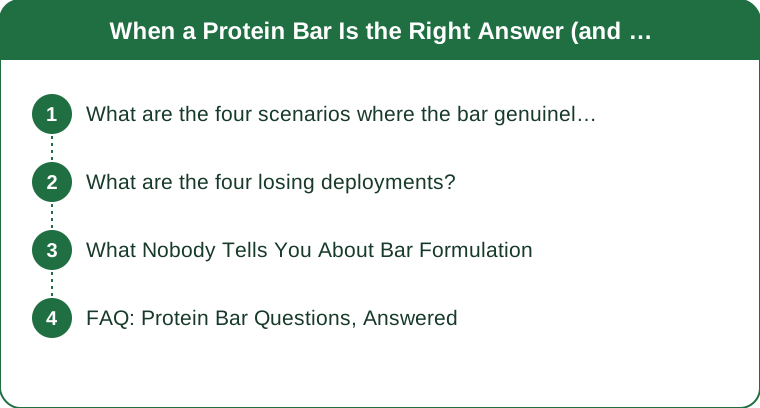
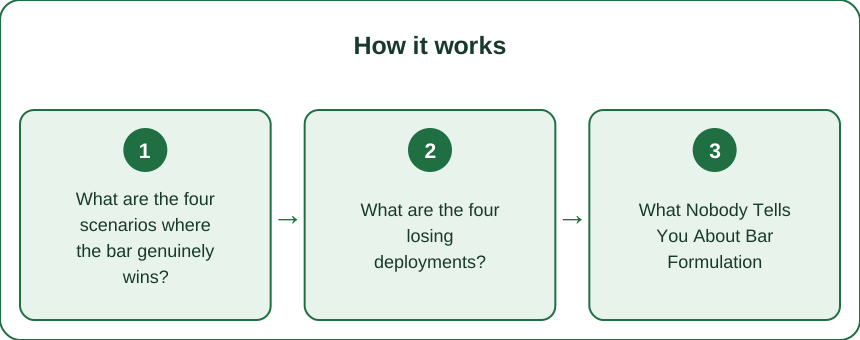
What are the four scenarios where the bar genuinely wins?
1. The gap-bridge: a 1pm lunch and an 8pm dinner with a 5:30 workout between — that’s the bar’s home turf. 15-20g of protein at 4:30 protects the workout, kills the pre-dinner ravenousness that causes over-eating, and requires no refrigeration, prep, or utensils.
2. The post-workout stopgap: when real food is 60+ minutes away, a bar in the gym bag beats the drive-home hunger spiral and the ‘earned it’ detour. (When food is 20 minutes away, the bar is solving a problem you don’t have.)
3. Travel and chaos days: airports, road trips, back-to-back meeting days — environments where the alternative isn’t a balanced meal but whatever survives in a kiosk. Against airport pizza, the bar is genuinely the nutritional high ground.
4. The vending-machine standoff: the 3pm office moment where the real choice is bar-from-your-drawer vs. candy-from-the-machine. Same category of pleasure, meaningfully better macros — harm reduction with a wrapper.
The common thread: the bar wins against its real alternatives — chaos, candy, skipping. It never wins against actual food; it was never supposed to.
What are the four losing deployments?
1. The daily meal replacement: a bar ‘lunch’ swaps a 400-600 calorie balanced meal for 200-250 calories of compressed paste that clears fast — the 3pm collapse and evening over-eat are the predictable bill. Bars lack the volume, fiber diversity, and micronutrients of even a modest real meal.
2. The dessert-with-credentials habit: the nightly post-dinner ‘protein’ bar is a candy bar wearing a lanyard — if it happens at home, after adequate meals, driven by sweetness rather than logistics, the protein content is a rationalization, not a reason. (Honest dessert is fine; dessert doing health cosplay distorts the whole diet’s accounting.)
3. The weight-loss cornerstone: bars are calorie-dense and satiety-light — the exact wrong profile for a deficit, where fullness-per-calorie is the entire game. Research and practice agree: whole-food protein (yogurt, eggs, lean meats, legumes) out-satisfies bars at equal calories, every time.
4. The at-home snack default: eating a bar 10 feet from a refrigerator is paying a 3-4x price premium for shelf-stability you’re not using. Greek yogurt with berries costs less, fills more, and delivers actual food.
The audit question that sorts every case: ‘What would I realistically eat if this bar didn’t exist?’ Better than the answer → skip the bar. Worse → that’s the bar’s job.

What Nobody Tells You About Bar Formulation
The category’s engineering explains both its utility and its traps:
The fiber-alcohol economy: hitting ‘high protein, low sugar’ on a label while remaining edible requires sugar alcohols and processed fibers (IMO syrups, soluble corn fiber) — which is why ambitious bars famously cause digestive drama at 2+ per day. The gut has opinions about compressed macronutrient arithmetic; single-bar days rarely trigger them, which conveniently matches the correct usage anyway.
The protein-quality spread: whey and milk-protein bars deliver complete, well-absorbed protein; some budget bars lean on collagen — technically protein grams, but an incomplete amino profile that shortchanges the muscle-building job the buyer assumed. Label-reading tip: the protein source matters more than the gram count separating 18g from 21g.
The satiety engineering paradox: bars are designed to be palatable — soft, sweet, fast to eat — which is precisely the opposite of filling. A bar disappears in 90 seconds; the apple-and-cheese it replaced takes 10 minutes of actual chewing. Some of the category’s satiety failure isn’t the macros; it’s the eating speed the format enforces.
None of this indicts the tool — it defines its dosage: mostly one, mostly out-of-house, mostly against worse alternatives. This is general information, not medical advice.
FAQ: Protein Bar Questions, Answered
What specs make a ‘good’ bar for the winning scenarios?
Working filter: 15-20g+ protein from dairy or soy sources, under ~10g sugar, some real fiber, and — the underrated spec — one you actually like enough to have in the bag when the scenario hits. The best bar is the one present at the gap; the perfect bar at home is losing to the fridge anyway.
Are homemade bars better?
Cheaper and cleaner-labeled, yes — oats, protein powder, nut butter, and a binder cover the gap-bridge job well. They lose on shelf-stability (the travel scenario) and convenience, which were the category’s whole value. Both can coexist: homemade for planned gaps, wrapped for chaos.
One bar a day — fine or too much?
As a logistics tool against real gaps: entirely reasonable, and typical guidance land. The flags are plural-bars-daily (displacing meals, inviting the digestive economy above) and the location tell — bars consistently eaten at home signal a habit that’s outgrown its use case.
TL;DR:
- The bar wins four scenarios: meal gaps, far-from-food post-workouts, travel chaos, and vending-machine standoffs
- It loses four: meal replacement, nightly credentialed dessert, weight-loss cornerstone, at-home fridge-adjacent snacking
- The audit question: ‘what would I eat if this bar didn’t exist?’ — the answer assigns the bar its job
- Specs matter less than presence: 15-20g dairy/soy protein, tolerable sugar, in the bag when the gap hits
It was never health food or junk food — it’s a wrench, and wrenches are only wrong when they’re pretending to be dinner. This is general information, not medical advice.
Keep Reading
This article is for general informational purposes only and is not medical advice. Always consult a qualified health professional for guidance specific to you.