Why a 'High Protein' Label Can Still Mean You're Basically Eating a Candy Bar
Quick Answer: A protein bar can legally market itself as ‘high protein’ while still containing 15-20 grams of added sugar and sugar alcohols that cause digestive discomfort — the protein content alone doesn’t tell you whether a bar is actually a nutritious choice or a candy bar with a marketing makeover.
‘High protein’ is a real, meaningful claim, but it’s only one line on a label that has several others worth checking before you decide a bar belongs in your regular rotation.

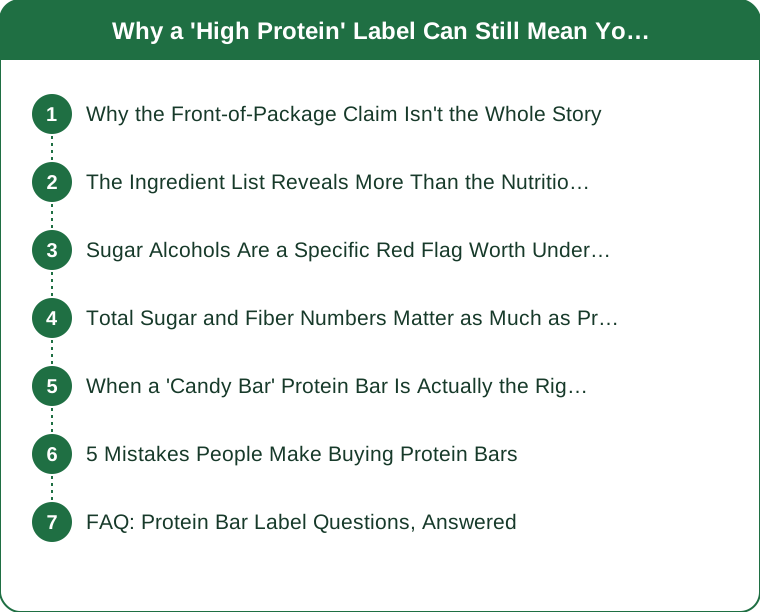
Why the Front-of-Package Claim Isn’t the Whole Story
Regulations around ‘high protein’ labeling focus specifically on protein content relative to serving size, and don’t restrict how much added sugar, saturated fat, or artificial sweetener can accompany that protein. This means a bar can genuinely deliver 20 grams of protein and still be, nutritionally, closer to a candy bar with a protein boost than a clean whole-food snack — the label claim and the overall nutritional quality are two separate things that don’t have to align.
The Ingredient List Reveals More Than the Nutrition Panel
Check where the protein comes from and what’s listed near the top of the ingredients. A bar where sugar, corn syrup, or a sugar alcohol appears in the first three ingredients — even alongside a legitimate protein source further down — leans closer to confectionery than a health snack, regardless of the grams-of-protein number on the front.
Sugar Alcohols Are a Specific Red Flag Worth Understanding
Many protein bars use sugar alcohols (erythritol, maltitol, sorbitol) to keep sugar content low while maintaining sweetness, but these compounds are poorly absorbed by many people’s digestive systems and commonly cause bloating, gas, or discomfort, especially in bars containing more than 5-8 grams of them. If a bar consistently causes stomach issues, checking the ingredient list for sugar alcohol content — not just sugar — is usually where the answer is.

Total Sugar and Fiber Numbers Matter as Much as Protein
A useful practical filter is comparing grams of sugar against grams of protein and fiber combined — a bar with 15+ grams of added sugar and under 3 grams of fiber is behaving more like a dessert nutritionally, even with a solid protein count. Bars with 5+ grams of fiber and under 8-10 grams of added sugar tend to be more genuinely balanced choices for a regular snack.
When a ‘Candy Bar’ Protein Bar Is Actually the Right Choice
This isn’t an argument that sweeter, more indulgent protein bars are never appropriate — sometimes a genuinely dessert-like protein bar is exactly the right choice, like satisfying a sweet craving with more protein and less sugar than an actual candy bar would provide. The point is knowing which category a bar falls into so you can choose intentionally, rather than assuming ‘high protein’ automatically means ‘healthy everyday snack.‘
5 Mistakes People Make Buying Protein Bars
1. Stopping at the front-label protein claim without checking sugar and ingredients. 2. Ignoring sugar alcohol content when a bar causes digestive discomfort. 3. Assuming all bars from a ‘healthy’ brand are automatically well-formulated. 4. Not comparing sugar-to-protein ratio across options. 5. Treating every bar as an everyday snack rather than reserving the more dessert-like ones for occasional cravings.
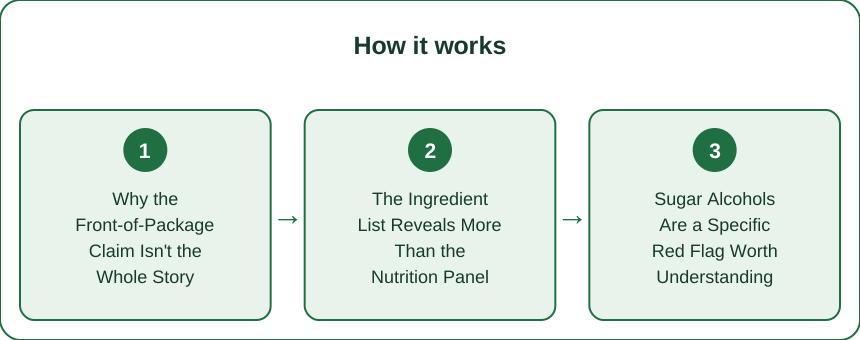
FAQ: Protein Bar Label Questions, Answered
What’s a genuinely good sugar target for a daily protein bar?
Under 8-10 grams of added sugar is a reasonable target for a bar meant as a regular, everyday snack rather than an occasional treat.
Are sugar alcohols unsafe, or just uncomfortable for some people?
They’re generally recognized as safe in moderate amounts, but digestive discomfort is common and dose-dependent, so it’s worth checking your personal tolerance rather than assuming a small serving is always fine.
Is a homemade protein bar automatically a better option?
Often, yes, mainly because you control the sugar and ingredient quality directly — but a homemade bar can still be high in sugar depending on the recipe, so the same label-reading logic applies to your own ingredient choices.
TL;DR:
- ‘High protein’ labeling rules don’t restrict sugar, fat, or sweetener content — check the rest of the label too
- Ingredient order and sugar alcohol content are better indicators of a bar’s actual nutritional profile
- Compare sugar grams against protein and fiber grams combined, not protein alone
- Some dessert-like protein bars are a fine intentional choice — just know which category you’re picking
The protein number on the front of the package is real, it’s just not the only number that decides whether a bar belongs in your everyday rotation.
Keep Reading
This article is for general informational purposes only and is not medical advice. Always consult a qualified health professional for guidance specific to you.