Why Protein Bars Taste Chalky Straight From the Fridge (And the Fix)
Quick Answer: Cold temperatures firm up the fats and binding agents in a protein bar, which reduces how easily it dissolves in the mouth and creates a drier, chalkier mouthfeel — letting a refrigerated bar sit at room temperature for 10-15 minutes before eating typically restores the intended smoother texture.
It’s a texture-physics issue, not a difference in the actual ingredients between a cold and room-temperature bar.

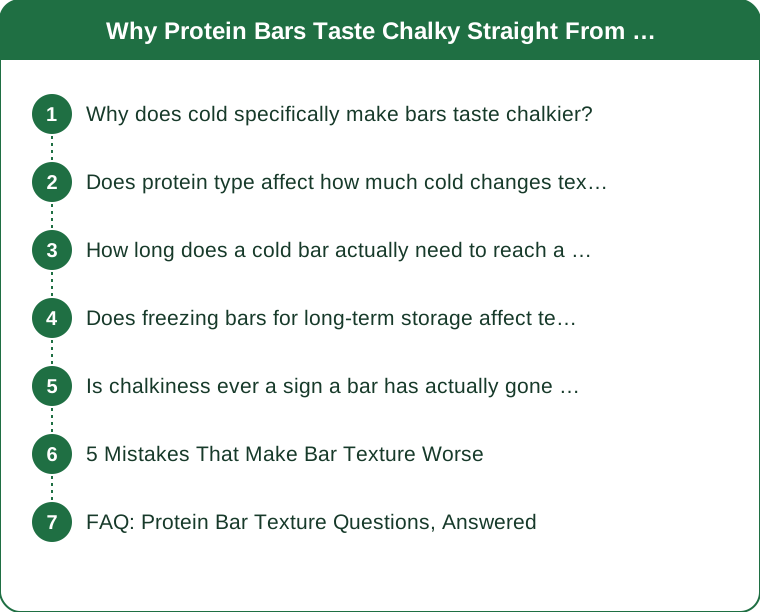
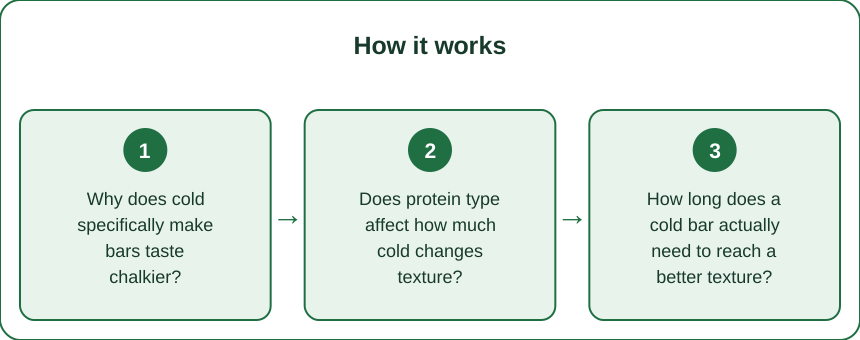
Why does cold specifically make bars taste chalkier?
Fats and oils used as binders firm up significantly in cold temperatures, which changes how the bar breaks down when chewed — a firmer fat structure dissolves more slowly and unevenly in the mouth, which reads as a dry, chalky texture rather than the smoother melt a room-temperature bar provides.
Does protein type affect how much cold changes texture?
Yes, somewhat — whey-based bars tend to firm up more dramatically cold than plant-protein bars with different binding structures, though the general cold-firming effect applies across most protein bar formulations to varying degrees.
How long does a cold bar actually need to reach a better texture?
10 to 15 minutes at room temperature is usually enough for most bars to soften back to their intended texture, though very cold (freezer-stored) bars may need slightly longer.

Does freezing bars for long-term storage affect texture more permanently?
Not usually permanently — freezing is a common and safe long-term storage method, and bars generally return to normal texture after thawing, though repeated freeze-thaw cycles can gradually affect texture more than a single freeze-and-thaw.
Is chalkiness ever a sign a bar has actually gone bad, not just cold?
It can be, if paired with other signs — chalkiness alone from cold temperature is textural, not a freshness issue, but chalkiness combined with an off smell or taste change is a separate signal worth checking the expiration date for.
5 Mistakes That Make Bar Texture Worse
- Eating straight from the fridge or freezer without letting it warm up.
- Microwaving briefly to warm it, which can make texture uneven or overly soft in spots.
- Storing bars near strong-smelling fridge items, which can affect flavor over time even if texture isn’t the issue.
- Repeated freeze-thaw cycling for bars kept in mixed hot-cold storage.
- Assuming chalky texture always means the bar has spoiled, throwing away perfectly good bars unnecessarily.
FAQ: Protein Bar Texture Questions, Answered
Is it safe to eat protein bars straight from the freezer?
Yes, generally safe, though the texture will be noticeably firmer and chalkier until it warms — some people prefer this texture intentionally, similar to a frozen snack.
Do all protein bar brands have this same cold-texture issue?
Most do to some degree, though bars with higher fat content or different binding agents (like dates versus processed fats) vary in how much cold affects them.
Does room-temperature storage risk spoilage compared to fridge storage?
Most commercial protein bars are shelf-stable at room temperature per their packaging — refrigeration is usually for taste preference or specific fresh/refrigerated bar products, not a safety requirement.
TL;DR:
- Cold temperatures firm up fats and binders, creating a drier, chalkier mouthfeel
- Whey-based bars tend to firm up more than plant-protein alternatives when cold
- 10-15 minutes at room temperature usually restores the intended texture
- Chalkiness from cold is textural, not a sign of spoilage on its own
Next time a cold bar tastes off, let it sit out for ten minutes before writing it off — the texture difference is almost always temperature, not quality.
Keep Reading
This article is for general informational purposes only and is not medical advice. Always consult a qualified health professional for guidance specific to you.