Why That Protein Bar Tastes Completely Different After a Few Weeks in Your Gym Bag
Quick Answer: Protein bars change texture and flavor over time mainly due to heat exposure and moisture migration between ingredients — a bag that sits in a hot car or gets carried daily accelerates protein hardening and fat separation far faster than the printed shelf life assumes.
You bought a full box, ate the first one fresh out of the fridge and loved it, then grabbed one from your bag three weeks later and it tasted like an entirely different product.
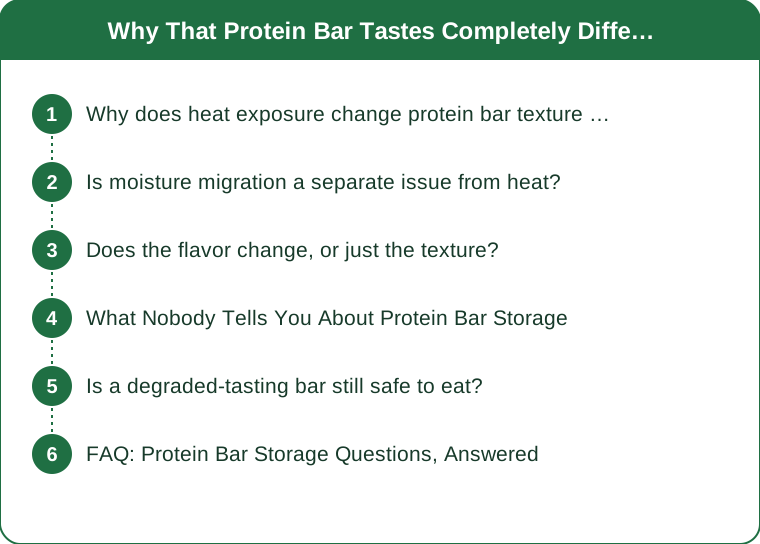
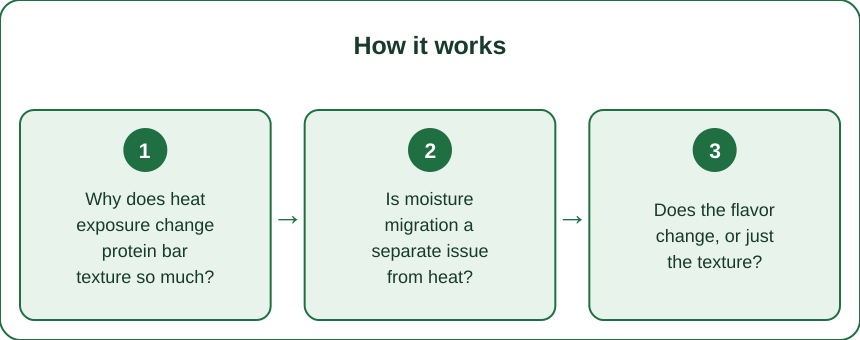
Why does heat exposure change protein bar texture so much?
Most protein bars use protein isomers (like whey or soy protein isolate) bound with sugar alcohols, fats, or syrups that are somewhat heat-sensitive. Repeated warming (a hot car, a bag left in direct sun) and cooling cycles cause the protein matrix to gradually harden and the fats to separate slightly, which is why a well-traveled bar often feels denser and chalkier than a fresh one.
This process, sometimes called protein migration or hardening, is largely irreversible once it’s occurred — refrigerating the bar afterward won’t restore the original texture.
Is moisture migration a separate issue from heat?
Yes — bars with multiple components (a soft filling and a coating, or fruit pieces next to a protein base) have ingredients with different natural moisture levels that slowly equalize over time even at stable temperature. This is why some bars taste noticeably drier in the protein layer and softer or stickier in the coating after weeks in storage — moisture has migrated from one area to the other.
Does the flavor change, or just the texture?
Both, but differently — texture change is primarily physical (fat separation, protein hardening), while flavor change often comes from mild oxidation of fats and flavor compounds breaking down slowly with heat and air exposure, producing the faintly bitter or “off” taste some bars develop well before their printed expiration date if stored poorly.
What Nobody Tells You About Protein Bar Storage
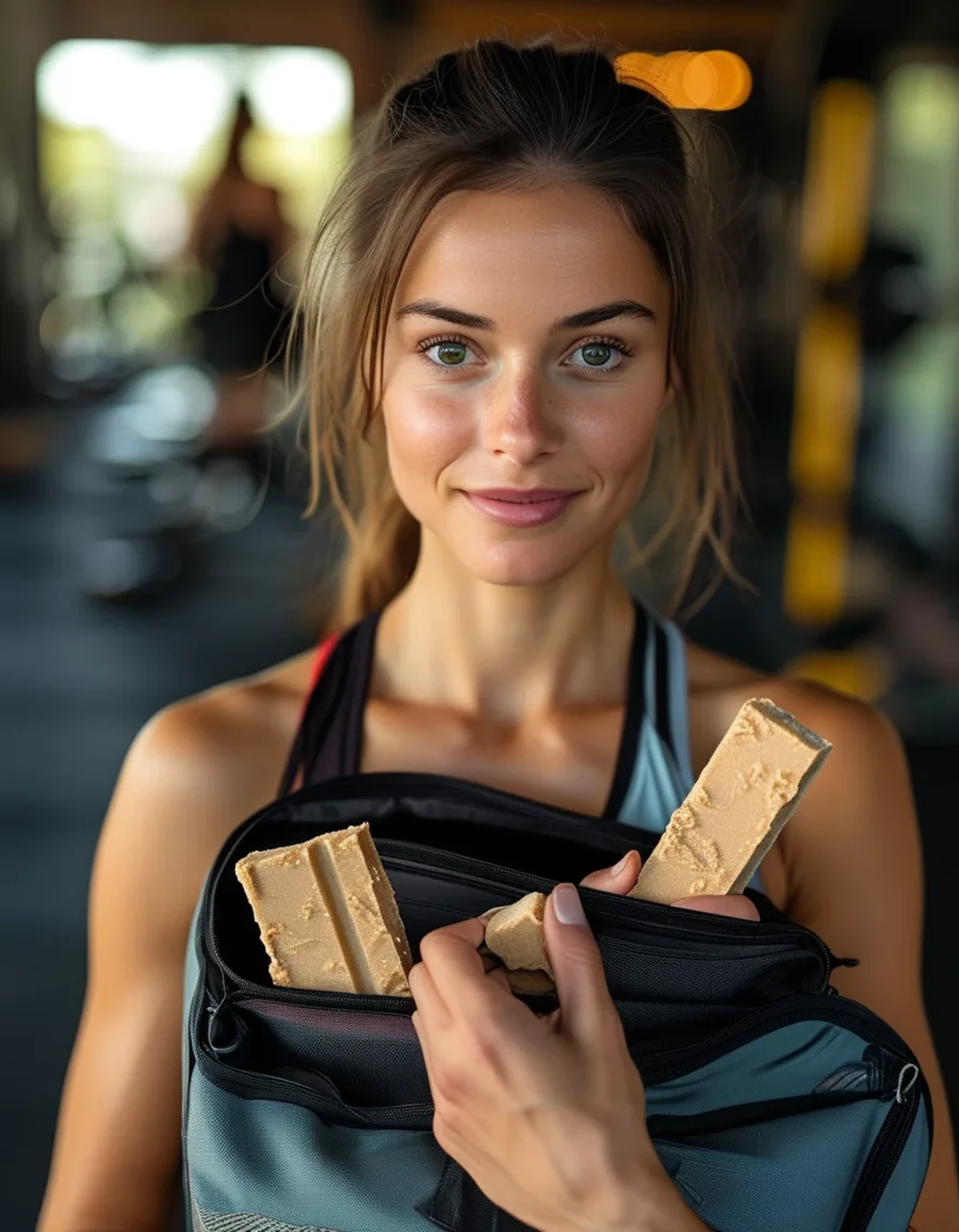
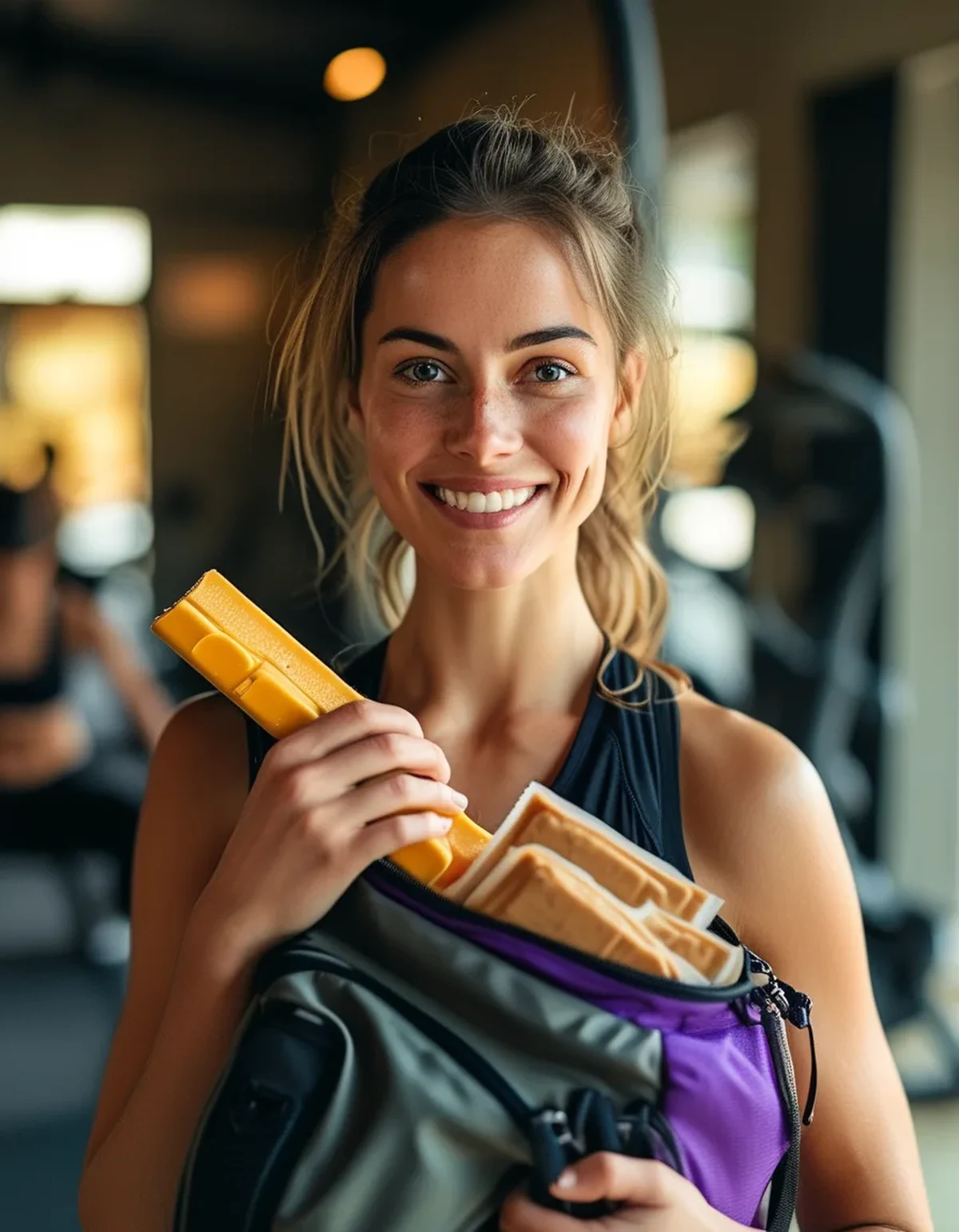
A bar’s printed shelf life assumes stable, cool, room-temperature storage — the reality of a gym bag (heat, temperature swings, compression from other items) is a much harsher environment than that testing condition, so a bar can taste noticeably degraded well before its printed date if it’s spent weeks getting warm and cold repeatedly.
Also underrated: bars near the printed expiration date are more sensitive to this abuse than fresher ones — buying in bulk and storing the bulk of your stock somewhere cool, grabbing just a few at a time for your bag, meaningfully improves the average quality of what you actually eat.
Is a degraded-tasting bar still safe to eat?
Generally yes, within the printed date — texture and flavor degradation from heat exposure is a quality issue, not typically a safety one, as long as the bar hasn’t been exposed to actual contamination (torn wrapper, visible mold, past expiration). If a bar tastes distinctly rancid or “off” beyond normal staleness, trust that signal and don’t eat it.
FAQ: Protein Bar Storage Questions, Answered
Does refrigerating protein bars extend their quality?
Yes, cold storage significantly slows the heat-driven texture and flavor changes — many people notice a meaningfully better bar when kept refrigerated versus room temperature.
Why do some bars stay soft in a hot bag while others turn rock hard?
It depends on the fat and sugar-alcohol blend used — some formulations are more heat-stable than others, which is a real difference between brands, not just your storage habits.
Is it worth buying bars in bulk if storage degrades them?
Yes, as long as the bulk of the stock stays in a cool pantry or fridge — only carry a few days’ worth in a bag at a time rather than the whole box.
TL;DR:
- Heat exposure gradually hardens the protein matrix and separates fats, changing texture
- Moisture migrates between a bar’s different components even without heat involved
- Flavor changes often come from mild fat oxidation, separate from the texture issue
- Store bulk stock cool and only carry a few days’ worth in a bag at a time
Keep Reading
This article is for general informational purposes only and is not medical advice. Always consult a qualified health professional for guidance specific to you.