Why the Second Protein Bar of the Day Lands Differently
Quick Answer: Most digestive complaints about protein bars trace to sugar alcohols and isolated fiber additives, and tolerance for both is a daily cumulative threshold. One bar sits below your threshold; two push past it, which is why the second bar seems to cause problems the first one didn’t.
The first bar is fine. It’s always fine. It’s the one you eat at 4pm that makes the rest of the evening a negotiation.

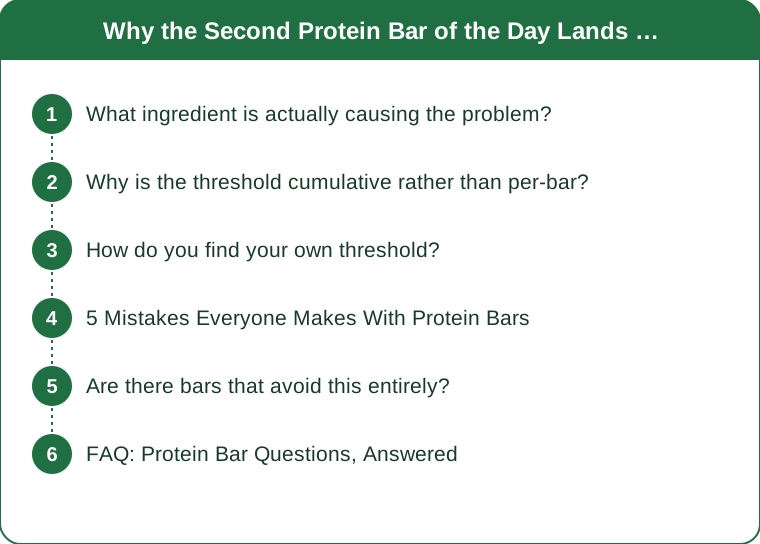
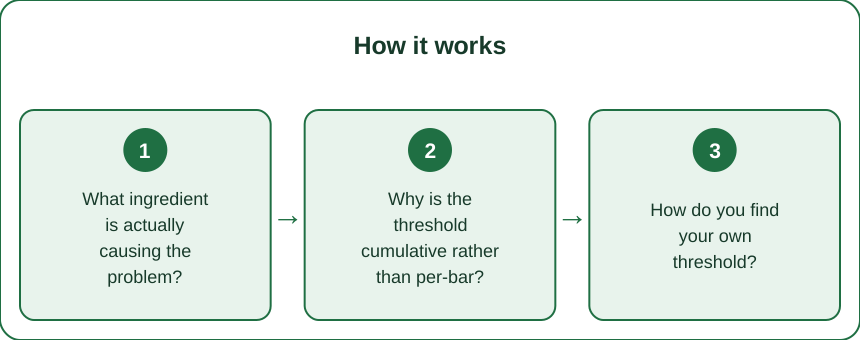
What ingredient is actually causing the problem?
Usually sugar alcohols — maltitol, sorbitol, erythritol and relatives — used to keep sugar counts low while preserving sweetness and texture.
They’re incompletely absorbed in the small intestine. What isn’t absorbed draws water into the gut and gets fermented by bacteria in the colon, producing gas and often loose stools. Maltitol is the most commonly implicated; erythritol is generally better tolerated because more of it is absorbed and excreted rather than fermented. Isolated fibers like inulin and chicory root produce a similar fermentation effect through a different route.
Why is the threshold cumulative rather than per-bar?
Because the mechanism depends on the total amount reaching the colon within a window, not on how it was packaged.
One bar might deliver an amount your gut handles quietly. Two bars in a day double the load, and the second one arrives while the first is still being processed. Add a sugar-free drink or a serving of high-fiber cereal and the total climbs further — which is why people often can’t identify the culprit food. The culprit isn’t a food; it’s a running total across the day.
How do you find your own threshold?
Empirically, over about a week. Read labels for total sugar alcohols and added fiber, and log the daily total alongside how you felt.
Most people find a fairly clean cutoff. Published tolerance figures vary widely between individuals, so your number is more useful than any general guideline. The practical version: if two bars is a problem and one isn’t, that’s your answer without needing to quantify anything further — split the second bar across two days or find a lower-alcohol option for the afternoon slot.

5 Mistakes Everyone Makes With Protein Bars
Mistake 1: reading only the protein number. The protein is rarely the problem. Scan for sugar alcohols and added fibers, which are usually further down the panel.
Mistake 2: assuming keto or sugar-free means gentler. Those are exactly the categories most likely to be sugar-alcohol heavy, since that’s how they hit the numbers.
Mistake 3: eating one right before training. Fermentation-related discomfort during exercise is unpleasant and entirely predictable. Give it 90 minutes or pick a different pre-workout food.
Mistake 4: stacking with a sugar-free drink. Diet drinks and sugar-free gum add to the same daily total, invisibly.
Mistake 5: blaming the whey. Genuine lactose issues exist, but whey isolate contains very little lactose. The fourth mistake is more often the actual explanation than the dairy is.
Are there bars that avoid this entirely?
Yes — the whole-food category. Bars built from dates, nuts, and egg white or whey protein without sugar alcohols or isolated fiber generally don’t produce these effects.
The trade is honest: they have higher sugar and calorie counts, because the sugar alcohols were doing a real job. For someone eating a bar as a convenient meal component rather than as a diet food, that trade usually favors the whole-food version. Checking the ingredient list for anything ending in -itol takes about three seconds and predicts most of your afternoon.
FAQ: Protein Bar Questions, Answered
Does tolerance improve with regular consumption?
Somewhat, for some people — gut bacteria adapt over weeks. But adaptation is partial and unreliable, and it’s not a reason to push through significant discomfort.
Is erythritol safer than maltitol?
It’s better tolerated digestively, since most is absorbed and excreted in urine rather than fermented. It has drawn other research attention recently, which is worth following.
Are protein bars a reasonable meal replacement?
Occasionally, for convenience. Most are engineered around macro targets rather than overall nutrition, so as a routine substitute for meals they’re a downgrade.
TL;DR:
- Sugar alcohols and isolated fibers, not protein, drive most protein bar digestive issues
- Tolerance is a daily cumulative total, which is why the second bar seems worse
- Diet drinks and sugar-free gum count toward the same total
- Whole-food bars avoid the issue at the cost of higher sugar and calories
- Scan the label for anything ending in -itol before buying
Track the daily total for a week and the pattern usually explains itself immediately.
Keep Reading
This article is for general informational purposes only and is not medical advice. Always consult a qualified health professional for guidance specific to you.